





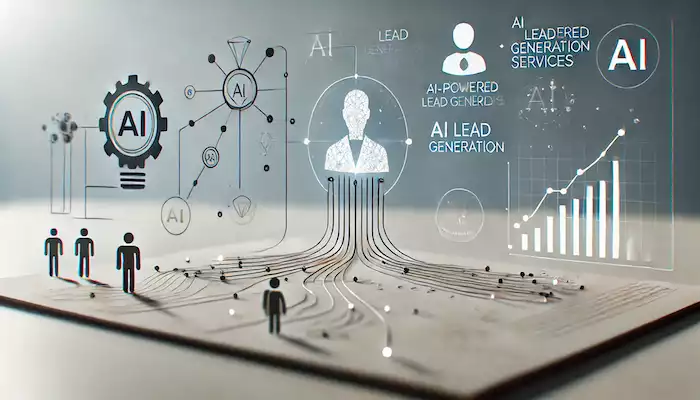

Artificial intelligence (AI) is changing how businesses find and connect with people. With AI Lead Generation, businesses can start building real, valuable relationships based on data instead of assumptions.
Introduction to AI in Lead Generation
Let's break down what AI lead generation means. We will also see why it is a big deal for businesses today.
The Evolution of Lead Generation
Traditional lead generation involved a lot of manual work. Think of cold calls, mass email blasts, and trade shows. These methods still have a place. But they are often inefficient. They cost a lot of time and money. The response rate is very low. Today, the digital world is crowded and noisy. Customers are smarter. They have more choices. It is much harder to get their attention.
What is AI Lead Generation?
AI lead generation is using smart tech to find, qualify, and nurture potential customers. Its core purpose is to find people who are actually interested in your product. This is very different from simple automation. Automation just does a task. It might send 1,000 identical emails. AI learns and decides. It can find the 50 best people to email. It can suggest the right message for each one. It can even predict who is most likely to buy.
Why AI is a Game-Changer for Lead Generation
AI changes the game. It makes lead generation more precise and efficient. It helps you focus your efforts on high-quality leads. This means you talk to the right people at the right time. You also use the right message. The result is a shorter sales cycle. You get higher conversion rates. Your team also wastes less effort.
How AI Powers Lead Generation

AI brings practical features that help you attract and convert more leads. From finding the right audiences to engaging them at the right time, AI makes lead generation faster, more targeted, and more effective.
Data Collection and Analysis
AI works by tracking customer actions and turning them into usable lead insights. Based on what people do, like chatting, booking, clicking, or asking about specific items, the system automatically tags and segments leads. Botcake AI supports this setup by collecting and organizing lead data from conversations, which can then be synced or mapped into your CRM, enabling your team to manage and follow up with the right customers in a more systematic way.
Predictive Analytics
AI helps you screen and identify potential customers directly through smart chat flows. Based on the triggers and keywords people share in conversation, the system automatically segments them into lead types, such as hot leads and cold leads. This makes it easier for your team to prioritize follow-ups and focus on customers who are most ready to convert.
Personalization and Segmentation
People ignore generic messages. AI helps you stop sending them. It allows you to personalize your outreach at scale. These groups are based on their behavior, interests, or needs. You can then tailor your emails, ads, and website content. This content will match those specific interests. This makes your marketing feel more like a helpful one-on-one conversation.
Automation of Lead Qualification and Nurturing
A lot of lead generation is repetitive. AI can automate these tasks. AI-powered chatbots are a perfect example. A chatbot can be available 24/7. It can answer common questions from website visitors. It can ask qualifying questions. This includes a person's budget or company size. This sees if they are a good fit. The chatbot can nurture these leads with helpful content. It helps them until they are ready to talk to a human salesperson.
Key AI Technologies Used in Lead Generation
You will often hear complex tech terms when people talk about AI. Here are the main technologies that power modern lead generation.
Machine Learning (ML)
Machine Learning is the "brain" of AI. It is a type of AI. It allows computers to learn from data. They learn without being explicitly programmed. ML models find patterns. They improve their performance over time. In lead generation, ML is used for lead scoring. It is also used for clustering. This means grouping similar customers. It can predict which marketing campaigns will be most effective.
Natural Language Processing (NLP)
Natural Language Processing, or NLP, gives computers the ability. They can understand human language. This technology is what allows a chatbot to understand your questions. NLP also analyzes text. This text comes from emails, support tickets, and social media comments. It can determine a person's intent. Are they asking a question or ready to buy? It also checks sentiment. Do they sound happy, angry, or confused?
Computer Vision
This technology is less common for lead generation, but it is growing. Computer Vision allows AI to understand and interpret images and videos. For example, it could analyze the images in your social media ads. It can see which ones get the most engagement from your target audience.
Robotic Process Automation (RPA)
RPA is the "hands" of the AI system. It is designed to automate simple, repetitive, rule-based tasks. Think about the boring jobs. This is like copying contact information from a web form. Then you paste it into your CRM system. RPA can handle these tasks perfectly. This frees up your team for more important work.
Implementing AI in Your Lead Generation Strategy
So, how do you actually get started with AI? It is a step-by-step process. It involves careful planning.
Assessing Your Current Lead Generation Process
First, you need to look at your current process. Where are the bottlenecks? Are you spending too much time on bad leads? Is your team overwhelmed with manual data entry? Identify your biggest pain points. Then, define clear goals for what you want AI to achieve. Do you need more leads, or do you need better leads?
Choosing the Right AI Tools and Platforms
Once you have your goals, you can look for the right software. There are many AI tools available, including solutions like Botcake AI, which help automate conversations and qualify leads more effectively. Some are dedicated platforms. Others plug into your existing CRM system. When choosing a tool, think about cost, scalability, and features. Most importantly, choose a tool that is easy for your team to use. It must also integrate well with your other software.
Data Preparation and Integration
AI runs on data. Your AI system will only be as good as the data you feed it. This is a critical step. Your data might be messy, old, or in different places. If so, the AI will not work well. You must take the time to clean your data. You also need to integrate your systems. You want a seamless flow of information. This flow should be between your marketing, sales, and service platforms.
Training and Optimizing AI Models
AI is not a "set it and forget it" solution. It requires training and refinement. You will need to test the system. You can run A/B tests. This will show which AI-generated messages get the best response. You will need to review the AI's decisions. You must also give feedback. This is a continuous loop of improvement. The more you use and train your AI, the smarter it becomes.
Benefits of AI Lead Generation
When you implement AI correctly, the benefits are huge. You will see improvements across your entire business.
Increased Efficiency and Productivity
This is often the first and most obvious benefit. AI automates the time-consuming, repetitive tasks. These tasks drain your team's energy. This frees up your human employees. They can focus on what they do best. This includes building relationships, thinking strategically, and closing complex deals.
Improved Lead Quality and Conversion Rates
AI stops your team from wasting time on dead-end leads. It uses predictive scoring. The AI identifies high-potential leads with much greater accuracy. Your sales team can then focus its efforts where it matters most. These leads are better qualified. They receive more personalized nurturing. Because of this, they are far more likely to convert into paying customers.
Enhanced Customer Experience
In today's world, customers expect fast answers. Nobody likes waiting 24 hours for a simple reply. AI-powered chatbots and virtual assistants can provide instant, helpful responses 24/7. This immediate engagement improves customer satisfaction.
Scalability and Growth
How do you grow your business without hiring a massive new sales team? AI is the answer. An AI system can handle 10 leads or 10,000 leads. It does this with the same efficiency. This allows your business to scale. This system supported their rapid expansion. It helped them achieve 300% growth over two years.
Challenges and Considerations
AI is a powerful tool. But it is not a magic wand. There are several important things you must consider before you jump in.
Data Privacy and Security
You are handling your customers' personal data. You have a legal and ethical responsibility to protect it. You must adhere to data privacy regulations like GDPR. Be transparent with your customers. Tell them how you are using their data. Always prioritize its security.
Integration Complexities
Getting your new AI tool to "talk" to your existing software can be difficult. This includes your CRM, email platform, and other tools. If your systems are not integrated, you create data "silos." This is where information gets trapped. You need a clear technical plan. This ensures a seamless flow of data between all your tools.
The Human Element: AI as an Assistant, Not a Replacement
AI is here to assist your team, not replace them. You will always need smart, creative humans. They must set the strategy. They must review the AI's work. They also handle complex and emotional talks that AI cannot. You must train your team to work with the AI tools.
Cost of Implementation and Maintenance
AI software has a cost. There can be an initial investment for setup and training. You must evaluate this cost. Compare it against the long-term return on investment (ROI). When you calculate the ROI, include the value of time saved. Also, include increased productivity. Finally, add the revenue from higher conversion rates.
Conclusion
In the near future, AI lead generation will focus on deeper personalization and real-time engagement, delivering unique experiences for each customer. Voice AI and conversational interfaces will become more common, enabling more natural interactions and lead qualification. At the same time, AI-powered content creation will allow teams to produce highly relevant content at scale. Finally, ethical AI and transparency will be essential for building trust and ensuring fair, unbiased decision-making
If you are ready to stop chasing, it is time to start connecting. You should look at AI-powered tools. Platforms like Botcake offer a practical and powerful way. They help you automate customer conversations and nurture leads. This turns more interactions into sales.